Keep the detail separate from its explanation
An observation records what is seen, heard or measured, with enough context to check it. An inference is an interpretation drawn from observations and other knowledge. The distinction does not mean inferences are bad: explanations need them. It means an explanation should remain connected to the evidence supporting it.
“There are wet marks under the window” and “someone entered through the window” are different claims. The first describes a visible detail. The second proposes how it came to be there. Rain through an open window, a spilled watering can or a visitor’s shoes might be alternatives.
A tiny case with more than one story
In our invented practice scene, a window is open and wet marks are on the floor. A witness says the gardener was outside. It is reasonable to investigate the window, but those details do not establish a theft, an entry route or a culprit.
Write two possible explanations. Then ask what new observation would distinguish them. A line of matching shoe impressions leading away from the window would be different evidence from a broad splash beneath it. Even a match would need context: when was it made, and could someone have been there for an ordinary reason?
Read the answer and reasoning without the exercise
Statements 1 and 3 are observations: one records a visible detail; the other records what a witness said. Statement 2 is an inference to test. Statement 4 is unsupported by this scene. Hearing a report does not independently establish that its contents are true.
Confidence does not supply a missing link
A witness can sound certain and still have limited information. Record the difference between “the witness said it happened” and “we have independently established it happened.” Ask what they directly perceived and whether the timing fits. An unknown fact should stay unknown until evidence supports a more specific statement.
Likewise, an attractive reconstruction can make an explanation feel real. It is still a model of events. Ask which details it explains, which details would conflict with it, and what evidence would make you revise it. Finding an alternative is useful even when your first explanation eventually survives the check.
Use the distinction in Detective Zero
In Detective Zero, inspect a clue and choose the observable detail before recording it. When questioning a witness, separate their direct account from their interpretation. On the evidence wall, explain why two clues belong together instead of joining them only because they make a satisfying story.
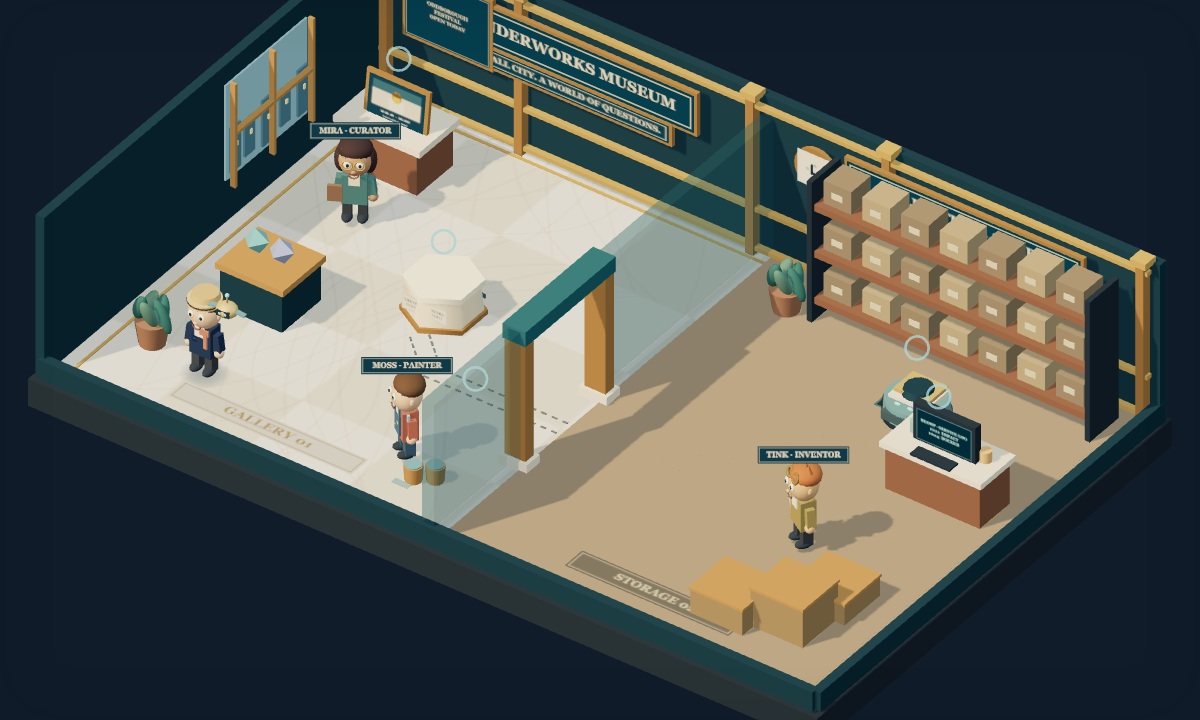
The practice scene here does not reveal the museum case’s solution. Carry the method into that investigation: retain a possible alternative, look for a discriminating clue, and state a limit on your conclusion. “This supports my explanation, but does not prove every detail” can be a more accurate answer than pretending uncertainty has disappeared.
Source & scope
Florida Department of Education: Scientific observations and inferences. The science standard distinguishes inferences drawn from observations. The detective scene, classifications and game prompts here are original practice, not forensic or legal advice.
This is an Aurism learning article, with AI-assisted development as described in our editorial approach. It does not claim an independent expert review or that a simplified model reproduces every game outcome. Report a correction.
TRY THE IDEA IN A GAME
Detective Zero
Use the mission’s actual instructions and feedback to test your next prediction.