Choose one common unit
A unit price expresses cost for a standard amount: coins per item, for example. Divide a pack’s price by the number of equivalent items it contains. The result helps compare differently sized packs without guessing from the packaging.
The word “equivalent” matters. Three large portions and four small portions are not automatically comparable by portion count. You might instead compare the same mass or volume. Whatever measure you choose, use it for both packs: coins per kilogram cannot be directly compared with coins per gram until the units are converted.
Six coins for three, ten coins for four
Pack A contains three identical items and costs 6 coins. Its unit price is 6 ÷ 3 = 2 coins per item. Pack B contains four of those items and costs 10 coins. Its unit price is 10 ÷ 4 = 2.5 coins per item. A is cheaper per item even though B contains more.
Now change B to 10 coins for five items. Its unit price becomes 2 coins per item, tying A. The larger pack is no longer a better unit-price deal; it simply buys more at the same rate. Compare before rounding so a close difference does not turn into a false tie.
Lower unit price is one piece of a decision
Suppose another pack contains ten items for 15 coins. Its 1.5-coin unit price is lower, but buying it spends 15 coins now. If you only need three items and cannot use the rest, the lower unit price does not automatically make it the better purchase.
Ask three separate questions: are the items comparable, how much do I need, and how much will I spend in total? Shelf life, storage, waste and different quality can change the choice. A unit-price calculation clarifies the arithmetic; it does not decide those preferences or constraints for you.
Read a market choice before buying
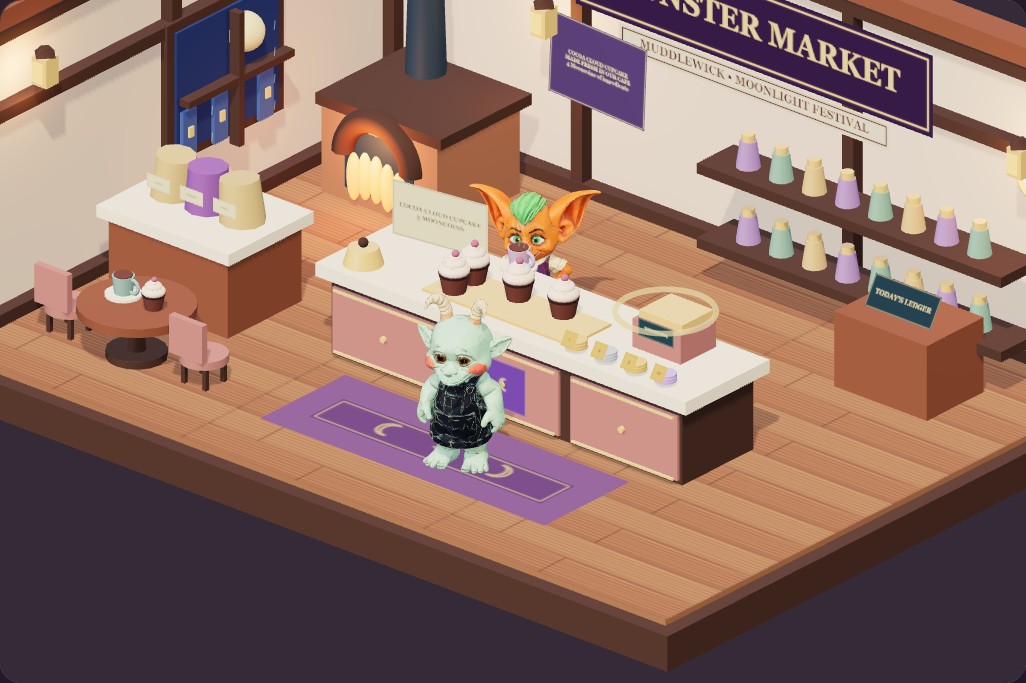
When Monster Market presents a supply or pricing decision, identify what the displayed number refers to: one item, one batch or a whole purchase. Use the mission’s actual quantities and costs. This page’s pack values are separate practice, not a claim about a particular supplier or recipe in the game.
Try explaining a choice before selecting it: “This costs more altogether, but less for each usable item,” or “This smaller amount fits the quantity I need.” Then check the resulting stock and coin totals. If the outcome surprises you, inspect the unit and quantity first. Changing several choices at once makes the mismatch harder to find.
Source & scope
NIST: Uniform Unit Pricing. Reference for comparing value using a consistent quantity. The pack choices and fictional coins above are original practice, not product recommendations.
This is an Aurism learning article, with AI-assisted development as described in our editorial approach. It does not claim an independent expert review or that a simplified model reproduces every game outcome. Report a correction.
TRY THE IDEA IN A GAME
Monster Market
Use the mission’s actual instructions and feedback to test your next prediction.